Showing posts with label The Periodic Table. Show all posts

Monday, March 21, 2016

157. Uncle Tungsten - X. Mendeleev


Jump to Introduction & Chronology
Jump back to Previous: Uncle Tungsten - IX. Volta to Maxwell to Hertz

Uncle Tungsten

Chapter 15 - Home Life

p181 Schubert lieder, “Nachtgesang”, not “The Linden Tree”, (referenced in The Magic Mountain) but still... Music over the radio and on the phonograph. I've already talked about what a revolution that was, to be able to hear music when you pleased without needing to play it yourself.


p186 [Of his older brother Michael’s descent into psychosis after his boarding school experiences.] I became terrified of him, for him, of the nightmare which was becoming reality for him, the more so as I could recognize similar thoughts and feelings in myself, even though they were hidden, locked up in my own depths. What would happen to Michael, and would something similar happen to me, too? It was at this time that I set up my own lab in the house, and closed the doors, closed my ears, against Michael’s madness. It was at this time that I sought for (and sometimes achieved) an intense concentration, a complete absorption in the worlds of mineralogy and chemistry and physics, in science -- focusing on them, holding myself together in the chaos. It was not that I was indifferent to Michael; I felt a passionate sympathy for him, I half-knew what he was going through, but I had to keep a distance also, create my own world from the neutrality and beauty of nature, so that I would not be swept into the chaos, the madness, the seduction, of his.


Chapter 16 - Mendeleev’s Garden

...
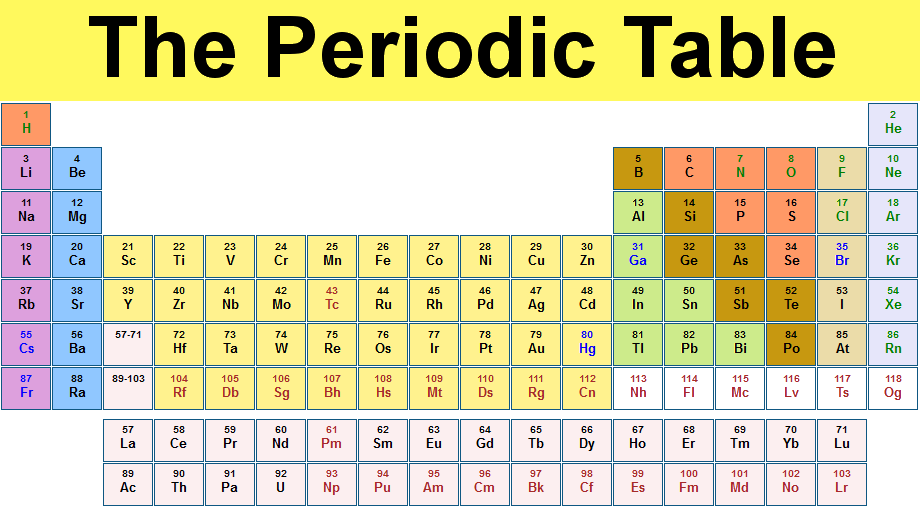
p188 [After first seeing a display -- a large cabinet with cubicles displaying samples -- labeled “The Periodic Classification of the Elements -- after Mendeleeff” at the re-opened Science Museum in South Kensington in 1945] I had, by this time become familiar with the properties of many elements and I knew they formed a number of natural families, such as the alkali metals, the alkaline earth metals, and the halogens. These families ([Dmitri] Mendeleev called them “groups”) formed the verticals of the table, the alkali and alkaline earth metals to the left, the halogens and inert gases to the right, and everything else in four intermediate groups in between. The “groupishness” of these intermediate groups was somewhat less clear -- thus in Group VI, I saw sulfur, selenium, and tellurium, but what was oxygen doing, heading the group? There must be some deeper principle at work -- and indeed there was. This was printed at the top of the table... The deeper principle, I saw, was valency. The term valency was not to be found in my early Victorian books, for it had only been properly developed in the late 1850s, [it's interesting that the term predates the understanding of what was actually happening. You can imagine a "Who's on First" conversation between a chemist from the middle of the 19th century and one from a century later] and Mendeleev was one of the first to seize on it and use it as a basis for classification, to provide what had never been clear before: a rationale, a basis for the fact that elements seemed to form natural families, to have deep chemical and physical analogies with one another. Mendeleev now recognized eight such groups of elements in terms of their valencies.

p189 Thus the elements in Group I, the alkali metals, had a valency of 1: one atom of these would combine with one atom of hydrogen to form compounds such as LiH, NaH, KH, and so on... The elements of Group II, the alkaline earth metals, had a valency of 2, and so would form compounds such as CaCl2, SrCl2, BaCl2, and so on. The elements of Group VIII had a maximum combining power of 8.
...
Every element echoed the properties of the one above, was a slightly heavier member of the same family. The same melody, so to speak, was played in each period [the horizontal lines of the table] -- first an alkali metal, then an alkaline earth metal, then six more elements, each with its own valency or tone -- but played in a different register (it was impossible to avoid thinking of octaves and scales here, for I lived in a musical house, and scales were the periodicity I heard daily). 

p190 It was eightness which dominated the periodic table before me...

I got a sudden, overwhelming sense of how startling the periodic table must have seemed to those who first saw it -- chemists profoundly familiar with seven or eight chemical families, but who had never realized the basis of these families (valency), nor how all of them might be brought together into a single overarching scheme. I wondered if they had reacted as I did to this first revelation: “Of course! How obvious! Why didn’t I think of it myself?”

...I had the sense that it harbored a marvelous secret, but it was a cryptogram without a key -- why was this relationship so?

...To have perceived an overall organization, a superarching principle uniting and relating all the elements, had a quality of the miraculous, of genius. And this gave me, for the first time, a sense of the transcendent power of the human mind, and the fact that it might be equipped to discover or decipher the deepest secrets of nature, to read the mind of God.

I'm psychic!
...
Unless I had a blackout and missed it, he has not explained what valency means. And I’m not sure, before I hit Wiki, if Mendeleev was basing this on the combinations the elements were known to make, or if he understood about the distribution of electrons in shells. No, he didn't understand what was actually happening.

p191 [His second visit the following day] ...Metals had long been recognized as a special category of elements, and now one could see, in a single synoptic glance, how they occupied three-quarters of the realm -- all of the west side, most of the south -- leaving only a smallish area, mostly in the northeast, for the nonmetals.  A jagged line, like Hadrian’s Wall, separated the metals from the rest, with a few “semimetals,” metalloids -- arsenic, selenium -- straddling the wall. One could see the gradients of acid and base, how the oxides of the “western” elements reacted with water to form alkalis, the oxides of the “easter” elements, mostly nonmetals, to form acids. One could see, again at a glance, how the elements on either border of the realm -- the alkali metals and halogens, like sodium and chlorine, for example -- showed the greatest avidity for each other and combined with explosive force, forming crystalline salts with high melting points which dissolved to form electrolytes; while those in the middle formed very different compounds -- volatile liquids or gases which resisted electric currents. One could see, remembering how Volta and Davy and Berzelius ranked the elements into an electrical series, how the most strongly electropositive elements were all to the left, the most strongly electronegative to the right. Thus it was not just the placement of the individual elements, but trends of every sort that hit the eye when one looked at the table. 

Seeing the table, “getting” it, altered my life. I took to visiting it as often as I could. I copied it into my exercise book and carried it everywhere; I got to know it so well -- visually and conceptually -- that I could mentally trace its paths in every direction... It was like a garden, the garden of numbers I had loved as a child -- but unlike this, it was real, a key to the universe. I spent hours now, enchanted, totally absorbed, wandering, making discoveries, in the enchanted garden of Mendeleev. 

I like the way Sacks gave us an insight into his state of mind, and concern about that, in the preceding chapter. Also, I have to say that this is more of what I would have expected from a book titled "The Periodic Table." I wonder if Sacks read that, was disappointed, and eventually wrote this to fulfill the promise of Primo Levi's title?

...
His [Mendeleev’s] book, his life, did not disappoint me. He was a man of encyclopedic interests. He was also a music lover and a close friend of Borodin (who was also a chemist). And he was the author of the most delightful and vivid chemistry text ever published, The Principles of Chemistry.
...
p196 It was nearly twenty years from Mendeleev’s first interest in classification to the emergence of his periodic table in 1869. This long pondering and incubation (so similar, in a way, to Darwin’s before he published On the Origin of Species) was perhaps the reason why, when Mendeleev finally published his Principles, he could bring a vastness of knowledge and insight far beyond any of his contemporaries -- some of them also had a clear vision of periodicity, but none of them could marshal the overwhelming detail he could.
...
...Mendeleev had gone to Karlsruhe with Borodin [the conference in 1860 when the atomic weights of the elements had finally been sorted out] (this was a musical as well as a chemical journey, for they stopped at many churches en route, trying out the local organs for themselves)... 

*Snort!* 

...
p198 Moving between conscious calculation and hunch, between intuition and analysis, Mendeleev arrived within a few weeks at a tabulation of thirty-odd elements in order of ascending atomic weight, a tabulation that now suggested there was a recapitulation of properties with every eighth element. And on the night of February 16, 1869, it is said, he had a dream in which he saw almost all of the known elements arrayed in a grand table. The following morning, he committed this to paper. 

This is here mostly because of the similarity to Adrian’s composing process toward the end of Doctor Faustus, but then there is the footnote... 


(Note: ...if one looks at the actual table Mendeleev sketched, one can see that it is full of transpositions, crossings-out, and calculations in the margins. It shows, in the most graphic way, the creative struggle for understanding which was going on in his mind. Mendeleev did not wake from his dream with all the answers in place, but, more interestingly, perhaps, woke with a sense of revelation, so that within hours he was able to solve many of the questions that had occupied him for years.)

p199 The logic and pattern of Mendeleev’s table were so clear that certain anomalies stood out at once. Certain elements seemed to be in the wrong places, while certain places had no elements. On the basis of his enormous chemical knowledge, he repositioned half a dozen elements, in defiance of their accepted valency and atomic weights. In doing this, he displayed an audacity that shocked some of his contemporaries (Lothar Meyer, for one, felt it was monstrous to change atomic weights simply because they did not “fit”). 

Thanks to what Sacks has told us about Mendeleev’s musical background, his confidence in this is easy to understand. A musician can knows, by looking at a score, what notes are going to “sound” like. It would be surprising if they didn’t sound as they “should.” And a person with a good ear could easily correct a score, after hearing music performed, to match the reality. 

I don’t think we’ve had a good tangent in a while -- how different is the experience of a piece of music for someone who reads music and can “experience” the music visually by viewing the score (again, a topic from Doctor Faustus) versus someone who doesn’t read music and only plays by ear. Is the symbolic representation of music a benefit or a detriment to true appreciation? Not being musical in this sense, I haven’t a clue about this.  


In an act of supreme confidence, Mendeleev reserved several empty spaces in his table for elements “as yet unknown.” He asserted that by extrapolating from the properties of the elements above and below (and also, to some extent, from those to either side) one might make a confident prediction as to what these unknown elements would be like. He did exactly this in his 1871 table, predicting in great detail a new element (“eka-aluminum”) which would come below aluminum in Group III. Four years later just such an element was found, by French chemist Lecoq de Boisbaudran, and named (either patriotically, or in sly reference to himself, gallus, the cock) gallium.

...There were some initial discrepancies between Lecoq’s observations and Mendeleeve’s predictions [of gallium], but all of these were rapidly resolved in favor of Mendeleev. Indeed, it was said that Mendeleev had a better grasp of the properties of gallium -- an element he had never even seen-- than the man who actually discovered it. 

p200 Suddenly Mendeleev was no longer seen as a mere speculator or dreamer, but as a man who had discovered a basic law of nature, and now the periodic table was transformed from a pretty but unproven scheme to an invaluable guide which could allow a vast amount of previously unconnected chemical information to be coordinated... 

p201 The keystone to the whole table, curiously, was not anticipated by Mendeleev, and perhaps could not have been, for this was not a question of a missing element, but of an entire family or group. When argon was discovered in 1894 -- an element which did not seem to fit anywhere in the table -- Mendeleev denied at first that it could be an element and thought it was a heavier form of nitrogen (N3, analogous to ozone, O3). But then it became apparent that there was a space for it, right between chlorine and potassium, and indeed, for a whole group coming between the halogens and the alkali metals in every period. This was realized by Lecoq, who went on to predict the atomic weights of the other yet-to-be-discovered gases -- and these, indeed, were discovered in short order. With the discovery of helium, neon, krypton, and xenon, it was clear that these gases formed a perfect periodic group, a group so inert, so modest, so unobtrusive, as to have escaped for a century the chemist’s attentions. The inert gases were identical in their inability to form compounds; they had a valency, it seemed, of zero.

I followed up on a footnote reference to Linus Pauling on p204-5 and found a bunch of good stuff, THIS and in particular THIS. And THIS offers an alternate historical perspective -- and do note that great quote from Newton which, again, seems to prefigure what would come to be known as the strong force. And HERE’s a version of the periodic table that Sacks and I could both love. It maps electronegativity to the elements on the table. The least electronegative elements are on the left while the most electronegative elements are mostly on the upper right near fluorine and chlorine. But, there's also a pool of heightened electronegativity in the middle of the metals -- notice how tungsten stands out. This, I believe, is due to the “metallic” bond where atoms share a bunch of elements instead of actually swapping them. This is also why metals are good conductors of electricity -- something else Sacks keeps talking about but never explains. These pools of shared electrons also are the reason metals are malleable. I just noticed that the other element that stands out in the middle is gold, of course. 


p210 While Mendeleev saw the periodic table primarily as a tool for organizing and predicting the properties of the elements, he also felt it embodied a fundamental law, and he wondered on occasion about “the invisible world of chemical atoms.” For the periodic table, it was clear, looked both ways: outward to the manifest properties of the elements, and inward to some as-yet-unknown atomic property which determined these...

After publishing this I ran into something interesting in Wiki that I'm going to quote below: 

Continuing Johann Wolfgang Döbereiner's work with triads and Jean-Baptiste Dumas' families of similar elements, [John Newlands] published in 1865 his 'Law of Octaves', which stated that 'any given element will exhibit analogous behaviour to the eighth element following it in the table.' Newlands arranged all of the known elements, starting with hydrogen and ending with thorium, into seven groups of eight, which he likened to octaves of music.[3][4] In Newlands' table, the elements were ordered by the atomic weights that were known at the time and were numbered sequentially to show their order. Periods were shown going down the table, with groups going across – the opposite from the modern form of the periodic table.
image
Newland's table of the elements.
The incompleteness of the table alluded to the possible existence of additional, undiscovered elements, such as the element germanium, which was predicted by Newlands.
The Law of Octaves was ridiculed by Newlands' contemporaries, and the Society of Chemists did not accept his work for publication.[5]


Jump to Next: Uncle Tungsten - XI. Spectroscopy

Saturday, March 12, 2016

148. Uncle Tungsten - I. We begin


Jump to Introduction & Chronology
Jump back to Previous: Righteous Mind - XIX. Moral entropy

Uncle Tungsten
by Oliver Sacks - Vintage edition 2001


My book club enjoyed Oliver Sacks' On the Move so much that we decided to add his Uncle Tungsten to our reading list. I thought it would just be autobiographical information about his childhood, I hadn't realized it was, in addition, a way of telling the story of the development of our current technological world, which is either based on science or, if you choose to view it this way, on the Mephistic Arts -- the un-natural powers Mephisto uses to assist Faust in his various adventures.

And I also hadn't anticipated that the story of Oliver Sacks' extended family would turn out to be the story of the bourgeoisie in miniature.  Despite Fernand Braudel's focus on the role of the Sephardic Jews in the growth of capitalism in the West, I tend to think first of the Calvinist contribution. But Sacks' Ashkinazi Jewish family is perfect in their outsider's isolation from the prior class structure combined with their amazing enthusiasm for science, technology, and participation in so many of the trends that left the old order behind and created a new order with so many unanticipated consequences. They are even entrepreneurial in advancing science.

The conclusion of all this is that I must blog this book as well. The challenge here is that Sacks uses his child self to recreate all the scientific steps that lead to our current understanding of the world. As readers, we learn things as he does which re-creates the steps of the great names of science in the very few scientific centuries leading up to our times. 

This is an inspired way to teach this history, but it is also frustrating because you can't discus the more profound levels of these subjects until the final secrets are revealed in the last chapters of the book. I am adopting yet another convention for this book, my comments will be color coded to distinguish notes made during my initial reading (in red) from notes made during this, second reading. 

I was also going to honor his method and refrain from going into the "electronic" aspects of chemistry (the ones that most interest me) until the end. Alas, that was too difficult. I will be explaining the phenomena he describes so that it makes sense to me -- when I can.


He begins with a description of his childhood home near Hampstead and all the questions about the world that he had as a strikingly inquisitive child. This is a sort of overture of the autobiographical and scientific topics that will be developed over the course of the book. (It would be possible to do a musical version of this book.) I'm going to skip his overture except to fill in the cast of characters: Besides his parents (both doctors) there are his brothers Marcus, David, and, closest to his age, Michael. Then the all important uncles: David (Uncle Tungsten), Abe (physics) and aunts, Birdie, Lina, Len, and more will be introduced later. Then his Landau grandfather -- no longer living.

These first several chapters do a wonderful job of depicting a comfortable, supportive, middle class life supported by family, the Jewish faith, and the science and technology of the age. And all this on the very cusp of the deluge as, with the start of the war in Europe in 1939, both Oliver and his brother Michael are evacuated out of London to attend a "safer" school in the countryside. 


Chapters 1-3.

p24 [Red indicates my original notes] Unrelated to what I'm interested in here, the teacher-turned-headmaster at the school the Sacks brothers attend seems to be unhinged by something relating to the new boarding school or the war. Or perhaps the power of his new position just brings out the worst in him. In any case, he is brutal to Oliver and Michael. Michael, as we know from On the Move, seems to be -- in his turn -- permanently unhinged by this experience and even Oliver is seriously affected.

The Greta the dachshund story seems to show, and I think this is what Sacks intends us to see, how young Oliver seems to have passed on his brutal treatment to the innocent Greta. This personal insight is very interesting. Child abuse, and child sexual abuse, is often passed down generation to generation. I've always been puzzled by the process or mechanism for this. 


p30 The other common consequence of abuse is dissociation -- and even finding refuge in a new personality. Sacks' creation of elaborate fictions that he passed off as reality makes it sound like he was pretty close to dissociation. And, of course, it was Michael who's personality was actually unhinged by this wartime exile experience. I have to say, given the long term consequences of the evacuation just on this one family, you have to wonder if it wouldn't have been better to have kept all the kids in London.

His extended family represents to a remarkable degree the bourgeois world order of science and trade. And being Jewish, they were in no way a part of the old Tory world order. Primo Levy (as we see him int The Periodic Table) is like this too, and I get the same feeling from Marcel's family in Lost Time, though that is supposed to be a middle class Catholic family. 

Friday, April 10, 2015

73. The Periodic Table - chapter 21 - Carbon


Jump to Introduction + Chronology

Jump back to Previous: The Periodic Table - chapter 20

April 10, 2015


p224 The reader, at this point, will have realized for some time now that this is not a chemical treatise: my presumption does not reach so far -- “ma voix est foible, et meme un peu profane.” ["my voice is weak, and even a bit secular"?] Nor is it an autobiography, save in the partial and symbolic limits in which every piece of writing is autobiographical, indeed every human work; but it is in some fashion a history.


It is -- or would have liked to be -- a micro-history, the history of a trade and its defeats, victories, and miseries, such as everyone wants to tell when he feels close to concluding the arc of his career, and art ceases to be long. Having reached this point in life, what chemist, facing the Periodic Table, or the monumental indices of Beilstein or Landolt, does not perceive scattered among them the sad tatters, or trophies, of his own professional past? He only has to leaf through any treatise and memories rise up in bunches; there is among us he who has tied his destiny, indelibly, to bromine or to propylene, or the -NCO group, or glutamic acid; and every chemistry student, faced by almost any treaties, should be aware that on one of those pages, perhaps in a single line, formula, or word, his future is written in indecipherable characters, which, however, will become clear “afterwards”: after success, error, or guilt, victory or defeat. Every no longer young chemist, turning again to the verhangnisvoll page in that same treatise, is struck by love or disgust, delights or despairs.


This is the heart of the book. I couldn't help looking for similarities in my education in philosophy and found something very similar. If we were talking about this decade, the key "element" would be Nietzsche, but during the '80s and '90s the key element would have been Boolean algebra -- something we studied for a couple weeks in one symbolic logic class. My "career" in computer programming and technical writing followed directly from my (surprising) enjoyment of those weeks of learning about Boolean algebra. Few things, if any, have had a greater effect on the course of my life.


p225 So it happens, therefore, that every element says something to someone (something different to each) like the mountain valleys or beaches visited in youth. One must perhaps make an exception for carbon, because it says everything to everyone, that is, it is not specific, in the same way that Adam is not specific as an ancestor -- unless one discovers today (why not?) the chemist-stylite who has dedicated his life to graphite or the diamond. And yet it is exactly to this carbon that I have an old debt, contracted during what for me were decisive days. To carbon, the element of life, my first literary dream was turned, insistently dreamed in an hour and a place when my life was not worth much: yes, I wanted to tell the story of an atom of carbon.


I thought I was going to skip over this “story of a carbon atom” without comment... as usual, I was wrong.


Our character lies for hundreds of millions of years, bound to three atoms of oxygen and one of calcium, in the form of limestone... For it time does not exist, or exists only in the form of sluggish variations in temperature, daily or seasonal, if... its position is not too far from the earth's surface. Its existence, whose monotony cannot be thought of without horror, is a pitiless alternation of hots and colds, that is, of oscillations (always of equal frequency) a trifle more restricted and a trifle more ample: an imprisonment, for this potentially living personage, worthy of the Catholic Hell. To it, until this moment, the present tense is suited, which is that of description, rather than the past tense, which is that of narration -- it is congealed in an eternal present, barely scratched by the moderate quivers of thermal agitation.


I think it would be better to describe it as asleep. What are temperature changes (that don't lead to a change of state) to an atom? Nothing I would wager. Embedded securely in its molecule, for this carbon atom time, as he says, truly would not exist.


p226 ...a blow of the pickax detached it and sent it on its way to the lime kiln, plunging it into the world of things that change. It was roasted until it separated from the calcium, which remained so to speak with its feet on the ground and went to meet a less brilliant destiny... Still clinging to two of its three former oxygen companions [carbon dioxide], it issued from the chimney and took the path of the air. Its story, which once was immobile, now turned tumultuous.
...
p226 Carbon, in fact, is a singular element: it is the only element that can bind itself in long stable chains without a great expense of energy, and for life on earth... precisely long chains are required. Therefore carbon is the key element of living substance: but its promotion, its entry into the living world, is not easy and must follow an obligatory, intricate path, which has been clarified (and not yet definitively) only in recent years. If the elaboration of carbon were not a common daily occurrence, on the scale of billions of tons a week, wherever the green of a leaf appears, it would by full right deserve to be called a miracle.


p227 The atom we are speaking of, accompanied by its two satellites which maintained it in a gaseous state, was therefore borne by the wind along a row of vines... It had the good fortune to brush against a leaf, penetrate it, and be nailed there by a ray of the sun. [what if it is hit by a photon in the air?] If my language here becomes imprecise and allusive, it is not only because of my ignorance: this decisive event, this instantaneous work a tre -- of the carbon dioxide, the light, and the vegetal greenery -- has not yet been described in definitive terms, and perhaps it will not be for a long time to come, so different is it from the other "organic" chemistry which is the cumbersome, slow, and ponderous work of man: and yet this refined, minute, and quick-witted chemistry was "invented" two or three billion years ago by our silent sisters, the plants, which do not experiment [?] and do not discuss, and whose temperature is identical to that of the environment in which they live. If to comprehend is the same as forming an image, we will never form an image of a happening whose scale is a millionth of a millimeter, whose rhythm is a millionth of a second, and whose protagonists are in their essence invisible...


Our atom of carbon enters the leaf, colliding with other innumerable (but here useless) molecules of nitrogen and oxygen. It adheres to a large and complicated molecule that activates it, and simultaneously receives the decisive message from the sky, in the flashing form of a packet [quantum] of solar light [photon]: in an instant, like an insect caught by a spider, it is separated from its oxygen, combined with hydrogen and (one thinks) phosphorus, and finally inserted in a chain, whether long or short does not matter, but it is the chain of life. All this happens swiftly, in silence, at the temperature and pressure of the atmosphere, and gratis: dear colleagues, when we learn to do likewise we will be sicut Deus [From Genesis: Latin term or phrase: Eritis sicut Deus, Scientes bonum et malum = You will be like God, knowing good and evil], and we will have also solved the problem of hunger in the world.


p228 ...Carbon dioxide... this gas which constitutes the raw material of life, the permanent store upon which all that grows draws, and the ultimate destiny of all flesh, is not one of the principal components of air but rather a ridiculous remnant, an "impurity," thirty times less abundant than argon, which nobody even notices... This, on the human scale, is ironic acrobatics, a juggler's trick, an incomprehensible display of omnipotence-arrogance, since from this ever renewed impurity of air we come, we animals and we plants, and we the human species, with our four billion [now seven] discordant opinions, our millenniums of history, our wars and shames, nobility and pride. In any event, our very presence on the planet becomes laughable in geometric terms: if all of humanity, about 250 million tons [now 438?], were distributed in a layer of homogeneous thickness on all the emergent lands, the "stature of man" would not be visible to the naked eye...


A couple thoughts here: perhaps increasing levels of carbon dioxide in the atmosphere are necessary to support a greater "weight" of human bio-mass on the planet. To the extent that we (or nature) get better at converting carbon dioxide into life, it could be argued that the inadvertent increase of carbon in the atmosphere since the Industrial Revolution could become a valuable resource.


Now our atom is inserted: it is part of a structure, in an architectural sense; it has become related and tied to five companions so identical with it that only the fiction of the story permits me to distinguish them. It is a beautiful ring-shaped structure, an almost regular hexagon, which however is subjected to complicated exchanges and balances with the water in which it is dissolved...


p229 It has entered to form part of a molecule of glucose... which prepares it for it to take on a higher responsibility: that of becoming part of a proteic edifice. Hence it travels, at the slow pace of vegetal juices, from the leaf... to the almost ripe bunch of grapes...


It is the destiny of wine to be drunk, and it is the destiny of glucose to be oxidized... its drinker kept it in his liver for more than a week... as a reserve aliment for a sudden effort; an effort he was forced to make the following Sunday... Farewell to the hexagonal structure: in the space of a few instants the skein was unwound and became glucose again, and this was dragged by the bloodstream all the way to a minute muscle fiber in the thigh, and here brutally split into two molecules of lactic acid, the grim harbinger of fatigue: only later, some minutes after, the panting of the lungs was able to supply the oxygen necessary to quietly oxidize the latter. So a new molecule of carbon dioxide returned to the atmosphere, and a parcel of energy that the sun had handed to the vine-shoot passed from the state of chemical energy to that of mechanical energy, and thereafter settled down in the slothful condition of heat, warming up imperceptibly the air moved by the running and the blood of the runner. "Such is life," although rarely is it described in this manner: an inserting itself, a drawing off to its advantage, a parasitizing of the downward course of energy, from its noble solar form to the degraded one of low-temperature heat. In this downward course, which leads to equilibrium and thus death, life draws a bend and nests in it. [What?]


p230 Our atom is again carbon dioxide, for which we apologize: this too is an obligatory passage; one can imagine and invent others, but on earth that's the way it is...


p231 ...man has not tried until now to compete with nature on this terrain, that is, he has not striven to draw from the carbon dioxide in the air the carbon that is necessary to nourish him, clothe him, warm him, and for the hundred other more sophisticated needs of modern life. He has not done it because he has not needed to: he has found, and is still finding (but for how many more decades?) gigantic reserves of carbon already organized, or at least reduced. Besides the vegetable and animal worlds, these reserves are constituted by deposits of coal and petroleum: but these too are the inheritance of photosynthetic activity carried out in distance epochs, so that one can well affirm that photosynthesis is not only the sole path by which carbon becomes living matter, but also the sole path by which the sun's energy becomes chemically usable... I will tell just one more story, the most secret...


p232 It [the carbon atom] is again among us, in a glass of milk. It is inserted in a very complex, long chain, yet such that almost all of its links are acceptable to the human body. It is swallowed... the chain is meticulously broken apart and the fragments, one by one, are accepted or rejected. One, the one that concerns us, crosses the intestinal threshold and enters the bloodstream: it migrates, knocks at the door of a nerve cell, enters, and supplants the carbon which was part of it. This cell belongs to a brain, and it is my brain, the brain of the me who is writing; and the cell in question, and within it the atom in question, is in charge of my writing, in a gigantic minuscule game which nobody has yet described. It is that which at this instant, issuing out of a labyrinthine tangle of yeses and nos, makes my hand run along a certain path of the paper, mark it with these volutes that are signs: a double snap, up and down, between two levels of energy, guides this hand of mine to impress on the paper this dot, here, this one.


It's only natural that a chemist would focus on the carbon -- the particular element involved -- but I'm more interested in the electrons; the dance of electrons from shell to shell and the interrelationships between atoms. Of course, it's the elemental characteristics that cause carbon to play its particular role in this story that make life possible -- the electron dance is just the means to an end.

Sometimes you just have to wonder
Following a birthday related plot line, I ended up this evening in a new (Moderne) bar in my neighborhood. (I was also reading Martha Grimes, which explains it all if you are familiar with her writing.) The people to my right at the bar caught my attention by talking about the post WW2 fate of Maryland Rye (whisky) -- it was, he said, taken over by Kentucky Bourbon interests. Then, and at this point I stopped eavesdropping and simply stared, he started talking about the chemistry of carbon -- even tracing the relative structures of diamond and graphite on cocktail napkins. I ordered another martini (I believe these people were the proprietors of the place) and filled in the amorphous carbon gap for them.


Carbon (C 6)  


“...As a member of group 14 on the periodic table, it is nonmetallic and tetravalent—making four electrons available to form covalent chemical bonds. There are three naturally occurring isotopes, with 12C and 13C being stable, while14C is radioactive, decaying with a half-life of about 5,730 years.[14] Carbon is one of the few elements known since antiquity.[15]
There are several allotropes of carbon of which the best known are graphite, diamond, and amorphous carbon.[16] The physical properties of carbon vary widely with the allotropic form. For example, graphite is opaque and black, while diamond is highly transparent. Graphite is soft enough to form a streak on paper (hence its name, from the Greek word "γράφω" which means "to write"), while diamond is the hardest naturally-occurring material known. Graphite is a very good conductor, while diamond has a very low electrical conductivity. Under normal conditions, diamond, carbon nanotubes, and graphene have the highest thermal conductivities of all known materials.
All carbon allotropes are solids under normal conditions, with graphite being the most thermodynamically stable form. They are chemically resistant and require high temperature to react even with oxygen. The most common oxidation state of carbon in inorganic compounds is +4, while +2 is found in carbon monoxide and other transition metal carbonyl complexes. The largest sources of inorganic carbon are limestones, dolomites and carbon dioxide, but significant quantities occur in organic deposits of coal, peat, oil and methane clathrates. Carbon forms a vast number of compounds, more than any other element, with almost ten million compounds described to date,[17] which in turn are a tiny fraction of such compounds that are theoretically possible under standard conditions.[citation needed]
Carbon is the 15th most abundant element in the Earth's crust, and the fourth most abundant element in the universe by mass after hydrogen, helium, and oxygen. It is present in all forms of carbon-based life, and in the human body carbon is the second most abundant element by mass (about 18.5%) after oxygen.[18] This abundance, together with the unique diversity of organic compounds and their unusual polymer-forming ability at the temperatures commonly encountered on Earth, make this element the chemical basis of all known life.”
...
“Carbon also has the highest sublimation point of all elements. At atmospheric pressure it has no melting point as its triple point is at 10.8 ± 0.2 MPa and 4,600 ± 300 K (~4,330 °C or 7,820 °F),[4][5] so it sublimes at about 3,900 K.[19][20]”
...
“Carbon combines with some metals at high temperatures to form metallic carbides, such as the iron carbide cementite in steel, and tungsten carbide, widely used as an abrasive and for making hard tips for cutting tools.
As of 2009, graphene appears to be the strongest material ever tested.[21] However, the process of separating it from graphite will require some technological development before it is economical enough to be used in industrial processes.[22]”
...
“Carbon-14 (14C) is a naturally occurring radioisotope which occurs in trace amounts on Earth of up to 1 part per trillion(0.0000000001%), mostly confined to the atmosphere and superficial deposits, particularly of peat and other organic materials.[57] This isotope decays by 0.158 MeV β− emission. Because of its relatively short half-life of 5730 years, 14C is virtually absent in ancient rocks, but is created in the upper atmosphere (lower stratosphere and upper troposphere) by interaction of nitrogen with cosmic rays.[58] The abundance of 14C in the atmosphere and in living organisms is almost constant, but decreases predictably in their bodies after death. This principle is used in radiocarbon dating, invented in 1949, which has been used extensively to determine the age of carbonaceous materials with ages up to about 40,000 years.[59][60]”
...
“Under terrestrial conditions, conversion of one element to another is very rare. Therefore, the amount of carbon on Earth is effectively constant. Thus, processes that use carbon must obtain it somewhere and dispose of it somewhere else. The paths that carbon follows in the environment make up the carbon cycle. For example, plants draw carbon dioxide out of their environment and use it to build biomass, as in carbon respiration or the Calvin cycle, a process of carbon fixation. Some of this biomass is eaten by animals, whereas some carbon is exhaled by animals as carbon dioxide. The carbon cycle is considerably more complicated than this short loop; for example, some carbon dioxide is dissolved in the oceans; dead plant or animal matter may become petroleum or coal, which can burn with the release of carbon, should bacteria not consume it.[67][68]”
...
“The simplest form of an organic molecule is the hydrocarbon—a large family of organic molecules that are composed of hydrogen atoms bonded to a chain of carbon atoms. Chain length, side chains and functional groups all affect the properties of organic molecules.
Carbon occurs in all known organic life and is the basis of organic chemistry. When united with hydrogen, it forms various hydrocarbons which are important to industry as refrigerants, lubricants, solvents, as chemical feedstock for the manufacture of plastics and petrochemicals and as fossil fuels.
When combined with oxygen and hydrogen, carbon can form many groups of important biological compounds including sugars, lignans, chitins, alcohols, fats, and aromatic esters, carotenoids and terpenes. With nitrogen it forms alkaloids, and with the addition of sulfur also it forms antibiotics, amino acids, and rubber products. With the addition of phosphorus to these other elements, it forms DNA and RNA, the chemical-code carriers of life, and adenosine triphosphate (ATP), the most important energy-transfer molecule in all living cells.”
...
“The English name carbon comes from the Latin carbo for coal and charcoal,[81] whence also comes the French charbon, meaning charcoal. In German, Dutch and Danish, the names for carbon are Kohlenstoff, koolstof and kulstof respectively, all literally meaning coal-substance.
Carbon was discovered in prehistory and was known in the forms of soot and charcoal to the earliest human civilizations. Diamonds were known probably as early as 2500 BCE in China, while carbon in the form of charcoal was made around Roman times by the same chemistry as it is today, by heating wood in a pyramid covered with clay to exclude air.[82][83]


In 1722, René Antoine Ferchault de Réaumur demonstrated that iron was transformed into steel through the absorption of some substance, now known to be carbon.[84] In 1772, Antoine Lavoisier showed that diamonds are a form of carbon; when he burned samples of charcoal and diamond and found that neither produced any water and that both released the same amount of carbon dioxide per gram. In 1779,[85] Carl Wilhelm Scheele showed that graphite, which had been thought of as a form of lead, was instead identical with charcoal but with a small admixture of iron, and that it gave "aerial acid" (his name for carbon dioxide) when oxidized with nitric acid.[86] In 1786, the French scientists Claude Louis Berthollet, Gaspard Monge and C. A. Vandermonde confirmed that graphite was mostly carbon by oxidizing it in oxygen in much the same way Lavoisier had done with diamond.[87] Some iron again was left, which the French scientists thought was necessary to the graphite structure. However, in their publication they proposed the name carbone (Latin carbonum) for the element in graphite which was given off as a gas upon burning graphite. Antoine Lavoisier then listed carbon as an element in his 1789 textbook.[88]
A new allotrope of carbon, fullerene, that was discovered in 1985[89] includes nanostructured forms such as buckyballs and nanotubes.[28] Their discoverers – Robert Curl, Harold Kroto and Richard Smalley – received the Nobel Prize in Chemistry in 1996.[90]The resulting renewed interest in new forms lead to the discovery of further exotic allotropes, including glassy carbon, and the realization that "amorphous carbon" is not strictly amorphous.[35]”  -Wiki


Jump to Next:  We resume